The Real Start of DESERT STORM…24 February 1991…35 years ago today!

In the predawn chill of February 24, 1991, my Heavy Machine Gun Platoon spearheaded Task Force Ripper’s advance into Kuwait, with our battalion trailing close behind. As Charlie Company urged us to slow our pace, we settled into attack positions by 0400, awaiting the signal. But chaos erupted at dawn when attached tanks mistakenly fired on friendly forces in Task Force Grizzly, killing four Marines in a direct hit on a 5-ton truck. I radioed urgently for a cease-fire, and my Marines pounded on tank hatches to halt the barrage—this was Desert Storm’s second major friendly fire tragedy, following an A-10 strike that claimed seven lives weeks earlier.
Undeterred, we pressed the assault. My platoon secured overwatch as engineers breached the first obstacle belt with MICLIC charges, plows, and rollers, punching through Saddam’s “impenetrable” defenses in under an hour amid fake plywood tanks that drew a grim chuckle. Halfway to the second belt, Iraqi artillery pinned us down during a baffling halt ordered by our commander, turning us into stationary targets. Resuming under fire, shrapnel wounded one of my gunners, but we charged on, suppressing enemy positions until white flags rose. Disarming surrendering Iraqis, we cleared crude bunkers littered with bodies and pushed toward Al Jaber Airfield.
By nightfall, after sporadic firefights, we halted amid oil well fires’ choking black smoke—zero visibility, disorienting even a short step from my Humvee. Then came the alarm: Mustard Gas detected. Donning MOPP Level 4 gear, I felt its burn on my skin, echoing WWI horrors. We endured the night sleepless, nicotine-fueled, dodging random shells, as I vowed to God for survival: Dan 2.0 emerging stronger.
This raw glimpse into ground combat’s fog reveals the valor, errors, and sheer grit of Marines in the Gulf War’s lightning offensive.

Rarely can defeat of an occupation force be accomplished solely by air power. Desert Storm required ground troops (aka: Grunts) to invade Kuwait and kick the occupying Iraqi forces out. Air power, beginning on 17 January 1991 had “softened” them up, but “boots on the ground” were required to deliver the “coup de gras.” We did, and in short order. I was the Heavy Machine Gun Platoon Commander (aka: Rat Patrol) of 1st Battalion, 5th Marines, Task Force Ripper, 1st Marine Division. Task Force Ripper was the “Main Effort” for 1st Marine Division and was comprised of two infantry battalions, moving north from Saudi Arabia into Kuwait. My battalion, 1/5, and 1st Battalion, 7th Marines, commanded by Lieutenant Colonel “Mad Dog” Mattis. I literally fought Desert Storm side-by-side with the legendary “Mad Dog” (aka: Callsign Chaos)! “Hi diddle diddle, straight up the middle!”

Here is an excerpt from my book, OUT OF AFRICA AND INTO THE CORPS:

“In the wee hours of 24 February 1991, and right on schedule, Heavy Machine Gun Platoon started moving towards our attack positions about a mile shy of the first obstacle belt with our battalion following in trace, right behind us. Charlie Company led the battalion, and several times I got a radio call from Captain Coia, their company commander. “Mustang, this is Bladerunner, over.” “Bladerunner, this is Mustang, over.” “Yeah, Mustang, you’re getting too far ahead of me, could you slow down a bit?” “Roger that, Bladerunner.” I would then inform my section leaders on my platoon’s radio net to slow down a bit. They were already tracking, because they were monitoring the battalion’s tactical net as well. It was about 0400 when we got into our attack positions and waited for the order to commence the attack. Shortly after daylight, the tank company attached to our battalion opened up fire on what they thought were enemy targets. I immediately assessed that they were firing at friendly forces. I tried to get ahold of their commander on the battalion’s tactical net. I couldn’t because he was directing fires on his company’s internal net and not monitoring the battalion tactical net. I immediately called to our battalion’s Operations Officer, Major Lockhart, to report what I suspected were the tanks firing at friendlies. “Dealer this is Mustang, over.” “Mustang, Dealer, go.” “Dealer, looks like our tanks are firing towards Task Force Grizzly.” Seconds later, Dealer makes an emergency announcement over the battalion tactical net. “Cease fire, cease fire, cease fire…all units immediately cease fire!” Unfortunately, the tank company was not monitoring the battalion tactical net, as they were on their company net, still directing fires on what they thought were enemy targets. I got on my internal platoon radio net and ordered my Marines out of their vehicles and told them to go bang on the hatches of the tanks, get their attention and tell them to “cease fire!” My Marines did as I ordered, but it still took several more minutes to get all the tanks to cease firing. They had fired several tank rounds into Task Force Grizzly’s zone, or area of operations, which was on the left flank of Task Force Ripper. One tank round was a direct hit on a Marine 5-ton truck in which four Marines of Lieutenant Max Galeai’s platoon were instantly killed and several others wounded. I could not believe that we already had casualties before even commencing the actual attack into Kuwait. It may have been worse, had not my Marines gone around to each of the tanks and told them to “cease fire.” This was the second major “friendly fire” incident of Desert Storm. First Light Armored Reconnaissance Battalion had been engaging an Iraqi force of approximately 50 tanks and armored personnel carriers south of the Kuwaiti town of al-Wafra on 29 January 1991. An A-10 Thunderbolt of the U.S. Air Force, mistaking the Marine unit for an Iraqi unit, fired a Maverick missile that struck one of our Marine Light Armored Reconnaissance Vehicles, killing seven Marines and wounding the others in the vehicle. We commenced the attack, shortly after the unfortunate friendly fire incident. My platoon moved up smartly to within two hundred meters of the first obstacle belt and established overwatch positions to provide security for our Battalion’s Engineer Detachment, led by Lieutenant Wayne Sinclair. We were taking no fire from the Iraqi side of the obstacle belt, as expected, because our intelligence analysts had assessed that all Iraqi troops had abandoned their positions on the first obstacle belt and had retreated behind the second obstacle belt, approximately ten miles to our north. We had rehearsed the obstacle belt breaching procedure numerous times in the months leading up to this moment and it went off like clockwork. The engineers brought up an Amphibious Assault Vehicle that was specially equipped to fire a mine clearing line charge (MICLIC). It is long, thin, and packed with C4 explosives. When detonated, it blows up everything in its path, creating a lane approximately eight feet wide by 350 feet in length. If there are subsurface mines, the over-pressure will detonate them down to a certain depth. The engineers had deployed a single line charge and blown it in under five minutes. They next brought up their specially built mine plough, which quickly plowed through the lane. Finally, a mine-roller went over the lane to flatten the surface and detonate any remaining mines or improvised explosive devices (IEDs). With the breaching lane cleared “hot,” I ordered two of my sections to the far side of the first obstacle belt to provide overwatch security, as the remainder of the battalion punched through. I went through with them and noted that there were a few fake Iraqi tanks on the far side along with a couple of smoldering tank hulks. The fake tanks had been built with plywood and painted to look like real tanks. They were so crude and ridiculous that I chuckled when I saw them. What Sadaam had called an “impenetrable” obstacle belt had been breached in under an hour. After our battalion was through, my platoon resumed our positions at the head of the battalion, leading the way to the second obstacle belt. We were half way there when we began to take artillery and mortar fire. Suddenly, Blackjack, the Battalion Commander ordered a halt. We became sitting ducks, and I was expecting to take direct hits any second. I called back to our Operations Officer, Dealer, to enquire as to the reason for the halt. He never responded directly, just telling me to hold in place. I could only surmise that Blackjack had gotten cold feet, after we started taking indirect fires from the Iraqi’s and decided to halt in order to figure out what to do. We all knew that halting was not the best thing to do. In fact, it was the worst thing to do. Continuing to move forward against our next objective, the second obstacle belt, was the right thing to do. Moving targets are much harder to hit than stationary targets. Finally, after what seemed like hours, but was about thirty minutes, we were ordered to resume the attack. Shortly after resuming the attack, an artillery round exploded close to Sergeant Jenkin’s Humvee. His gunner, Lance Corporal Art Windsor, who was in the turret, manning his .50 caliber machine gun, was wounded by shrapnel in his hand. I ordered Gunny Miles, our Platoon Sergeant to evacuate Lance Corporal Windsor back to the mobile Battalion Aid Station. Meanwhile, we continued to press forward as all this was taking place. As my platoon approached to within a mile of the second obstacle belt, we started taking direct fire from the Iraqi troops, manning their positions at the second obstacle belt. I ordered my platoon to open fire on enemy targets. We were firing on the move as we continued to close in on the second obstacle belt. Suddenly, my lead section spotted white flags going up from the second obstacle belt. Upon receiving the report, I ordered a “cease fire.” My guys stopped firing as we continued to approach the Iraqi positions. It turned out that the second obstacle belt was just a line of Iraqi fighting positions. The Iraqi troops were exiting their fighting positions and lining up in a formation behind them. My Marines were going through their crudely built fighting positions to ensure they were cleared. They asked me what to do with the dead bodies. I told them that we had to leave them for follow-on forces, because we were now going to be leading our battalion’s attack on our third objective, the airfield called Al Jaber, just three miles away. My guys went through the large formation of Iraqi troops to make sure they were disarmed, and I ordered them in Arabic to remain in place…that our follow-on forces would process them. My platoon then proceeded to lead our battalion to the airfield and Blade Runner was given the order by Dealer to clear the East side. Marines from 2nd Marine Division were clearing the other side of the airfield. It was dark when Charlie Company accomplished their mission with only a few sporadic fire fights at the airfield. Dealer ordered me to continue leading the march to the north. We moved away from the airfield, but then were ordered to halt, while the rest of the battalion caught up to us. Night descended on us like a thick, heavy, blanket. It was a total blackout, the likes of which I had never experienced. Thick, dark, noxious, black, oily, smoke had enveloped us. The smoke was from the oil well fires, which the Iraqi troops had started at the beginning of the air campaign. Visibility was zero. I could not see my hand six inches away from my face. At one point, I needed to take a leak and exited my Humvee to pee. I only went about ten feet from my vehicle, but when I was done, I could not see anything and became disoriented. I finally dropped down to my hands and knees and crawled in the direction of my Humvee until I bumped into it. I got back into my Humvee in time to hear from Dealer to go to MOPP Level 4…that Mustard Gas had been detected. Our battalion had a special vehicle that was equipped with sensors to detect chemical and biological substances in the environment. This vehicle had detected Mustard Gas, likely from one of the artillery rounds being fired in our direction by the Iraqi troops. After I put my gas mask on, I felt a distinct burning sensation on the back of my neck, consistent with exposure to Mustard Gas. The Germans had used it against American troops, during trench warfare in World War I. It wasn’t until two hours later that we got the “all clear” signal and were able to at least remove our gas masks. Military gas masks are very uncomfortable and make communication extremely difficult. The person who invents a gas mask that is even marginally better than the one currently used, could become a millionaire overnight, provided the military buys it. Our battalion spent the night there, but we were too hyped up to get any sleep. I was thankful to have my stash of Copenhagen. The fresh hits of nicotine keep me awake and alert. It’s hard to get any sleep when random artillery rounds are exploding nearby, and your mind is wondering if you’re going to be the next victim. I promised God that if He kept me safe, I would endeavor to be a better man for the rest of my life…Dan 2.0.”

May those who gave the ultimate sacrifice in Desert Storm “Rest in Eternal Peace.” For “all gave some, and some gave ALL!”

Semper Fi…Colonel Daniel Hunter Wilson…Retired Marine

The Eve of the Real Desert Storm…23 February 1991…Thirty-five years ago tonight!

The day before the ground invasion, our Operations Officer (callsign Dealer) asked me to mark the route to the first obstacle belt in Kuwait with chem lights that were only visible to our forces. Mission accomplished and we got our final briefing from the intel weanies who knew nothing. I gave my Marines the real gouge on the warrior prowess of Arab forces…they have none, simply put!

The real start of Desert Storm was the ground invasion of Kuwait by us grunts on 24 February 1991. Here’s what my Heavy Machine Gun Platoon (1st Battalion, 5th Marines, Task Force Ripper, 1st Marine Division) did that day…from my book, OUT OF AFRICA AND INTO THE CORPS:

On February 23rd, 1991, Dealer called out to me and asked that I mark a route for our battalion to the first obstacle belt. I grabbed Sergeant Jenkins’ section. One of his superb Squad Leaders was Corporal Tod Shores. We found a suitable route to the point in the obstacle belt that was 1/5’s designated penetration point. On the way back to our battalion’s position, we emplaced infrared chem-lights, making them only visible to our eyes, traveling from south to north and not to any enemy eyes looking to the south from the north. We accomplished the mission and made it back to our platoon area about 1700. In just seven hours, our battalion was to begin movement to our attack positions at 0001 on 24 February 1991.

In the final briefing by our intelligence analysts, they predicted that we would face fierce opposition from the Iraqi troops in Kuwait and predicted thirty percent casualties in the fight through the obstacle belts.

When they departed, I told my Marines of Heavy Machine Gun Platoon that I felt the intel guys were full of shit. “My dad used to joke about the shortest book in the world being of Arab war heroes,” I said. “I grew up for a good chunk of my life around Arabs. My experience is that when faced with danger, they are cowards unless they are hyped up on drugs, like methamphetamines. My personal assessment is that when faced with United States Marines, they will quickly surrender and throw up white flags. How we perform in battle will reverberate through eternity. We will prevail and be heading home soon to tell our war stories back home. Our road home is through Kuwait. The faster we get this done, the faster we go home to our families and the land of ‘milk and honey.’ Our reputation precedes us into battle, warriors. Let us not disappoint our legendary Marine heroes on whose shoulders we stand today. When God is for us, no one can stand against us, and I am certain that God is with us. We will fight, fight, fight, crush our enemies, and see them driven before us.’” I then directed our Marines to “suit up at MOPP Level 2.” From our training in Nuclear, Biological, and Chemical (NBC) warfare, we know that MOPP stands for Mission Oriented Protective Posture and the various levels are to protect military members. MOPP Level 2 is actually putting on and wearing the chemical suit that is worn over our uniforms along with the overboots. We were each issued a single suit that we put on, carrying our gas masks and gloves on our person. This combo was worn for the next four days. It was hot and sweaty…very uncomfortable but had to be worn.

MARK TWAIN by Ron Chernow

Ron Chernow’s “Mark Twain” masterfully captures the wit, complexity, and enduring legacy of America’s greatest humorist, blending meticulous research with engaging narrative to bring Samuel Clemens vividly to life.

I have enjoyed reading almost all of Ron’s books, but particularly this one! In the pantheon of American literary biographies, Ron Chernow’s “Mark Twain” stands as a towering achievement—a richly detailed, profoundly insightful portrait of Samuel Langhorne Clemens, the man behind the iconic pen name. Published in 2025, this Pulitzer Prize-winning author’s latest work dives deep into the life of the writer hailed by William Faulkner as the “father of American literature.” Chernow, known for his masterful biographies of figures like Alexander Hamilton and Ulysses S. Grant, brings the same rigorous scholarship and narrative flair to Twain, resulting in a book that is as entertaining as it is enlightening.

From Twain’s humble beginnings in Hannibal, Missouri, where his boyhood adventures inspired classics like “The Adventures of Tom Sawyer” and “Adventures of Huckleberry Finn,” Chernow traces a journey marked by ambition, innovation, and no small amount of chaos. We see young Sam as a steamboat pilot on the Mississippi, a role that not only shaped his pseudonym (“Mark Twain” meaning “two fathoms deep”) but also infused his writing with the rhythms of the river and the raw pulse of frontier life. Chernow deftly explores how the Civil War disrupted this path, propelling Twain westward to Nevada, where he honed his satirical voice as a journalist, lampooning everything from politics to human folly.

What sets this biography apart is Chernow’s unflinching examination of Twain’s complexities. Far from a one-dimensional humorist, Twain emerges as a man grappling with fame’s double-edged sword: shamelessly courting celebrity while crafting a persona that masked personal vulnerabilities. Chernow delves into Twain’s financial misadventures, from disastrous investments in inventions like the Paige Compositor to his near-bankruptcy, revealing a restless entrepreneur whose optimism often bordered on recklessness. Yet, these setbacks fueled some of his sharpest works, including the biting social commentary in “The Gilded Age.”

Personal tragedies add poignant depth to Chernow’s narrative. The loss of Twain’s beloved wife, Livy, and several children is handled with sensitivity, showing how grief darkened his later years and influenced his more philosophical writings. Chernow also confronts Twain’s evolving views on race and imperialism, positioning him as a progressive voice who boldly critiqued slavery and American expansionism, even as he navigated the prejudices of his era. Drawing on thousands of letters, unpublished manuscripts, and archival treasures, Chernow paints a Twain who was both a product of 19th-century America and a prescient critic of its flaws.

At over 1,000 pages, “Mark Twain” is no light read, but Chernow’s prose flows like the Mississippi itself—propelled by Twain’s own exuberant spirit. Quotes from Twain’s letters and lectures pepper the text, bringing his irreverent humor to the fore: “The secret of getting ahead is getting started,” or his famous quip on quitting smoking (“easy—I’ve done it thousands of times”). This biography not only chronicles a life but revives it, making Twain feel as vital and relevant today as he was in his heyday.

For fans of history, literature, or simply great storytelling, Ron Chernow’s “Mark Twain” is essential reading. It reminds us why Twain’s legacy endures: his ability to hold a mirror to society with wit and wisdom. In an age of superficial fame, this book celebrates a true original who turned personal reinvention into an art form. Highly recommended—dive in and let the current carry you away! I’m sure you’ll enjoy it as much as I did!
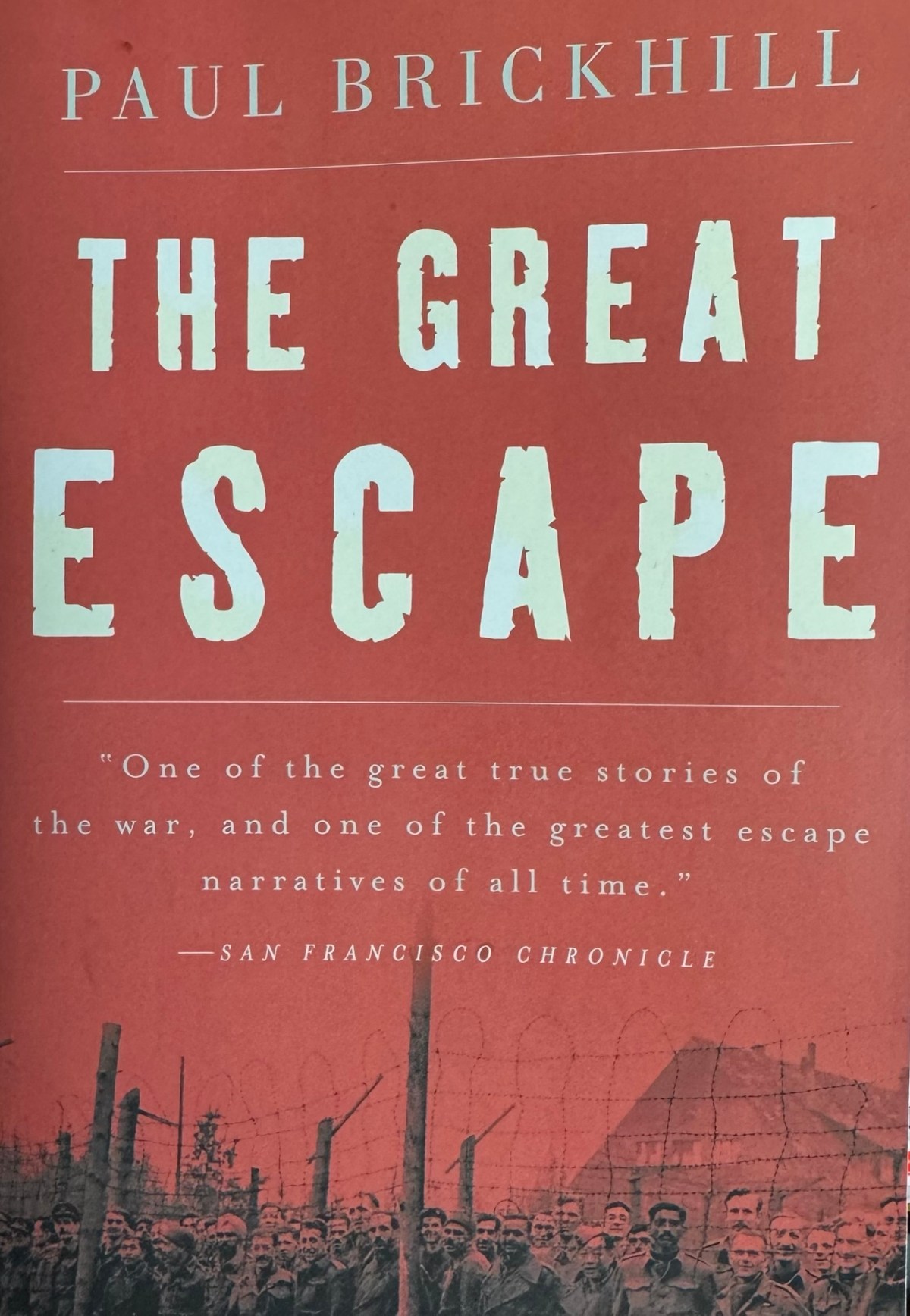
THE GREAT ESCAPE by Paul Brickhill

“Brickhill’s insider account turns a daring WWII escape into a pulse-pounding saga of human ingenuity and unbreakable spirit.”

I really enjoyed this book that I’ve been meaning to read for years. Now that I am off all social media, I have plenty of time to read and I’m loving it. Paul Brickhill’s “The Great Escape” masterfully chronicles the audacious WWII POW breakout from Stalag Luft III, blending tension, ingenuity, and human resilience. As a participant, Brickhill delivers authentic, gripping details of tunnel-digging heroics, forged documents, and daring disguises amid Nazi scrutiny. This timeless tale of camaraderie and defiance against tyranny captivates, reminding us of freedom’s cost. A must-read for history buffs—thrilling as fiction, profound as fact.

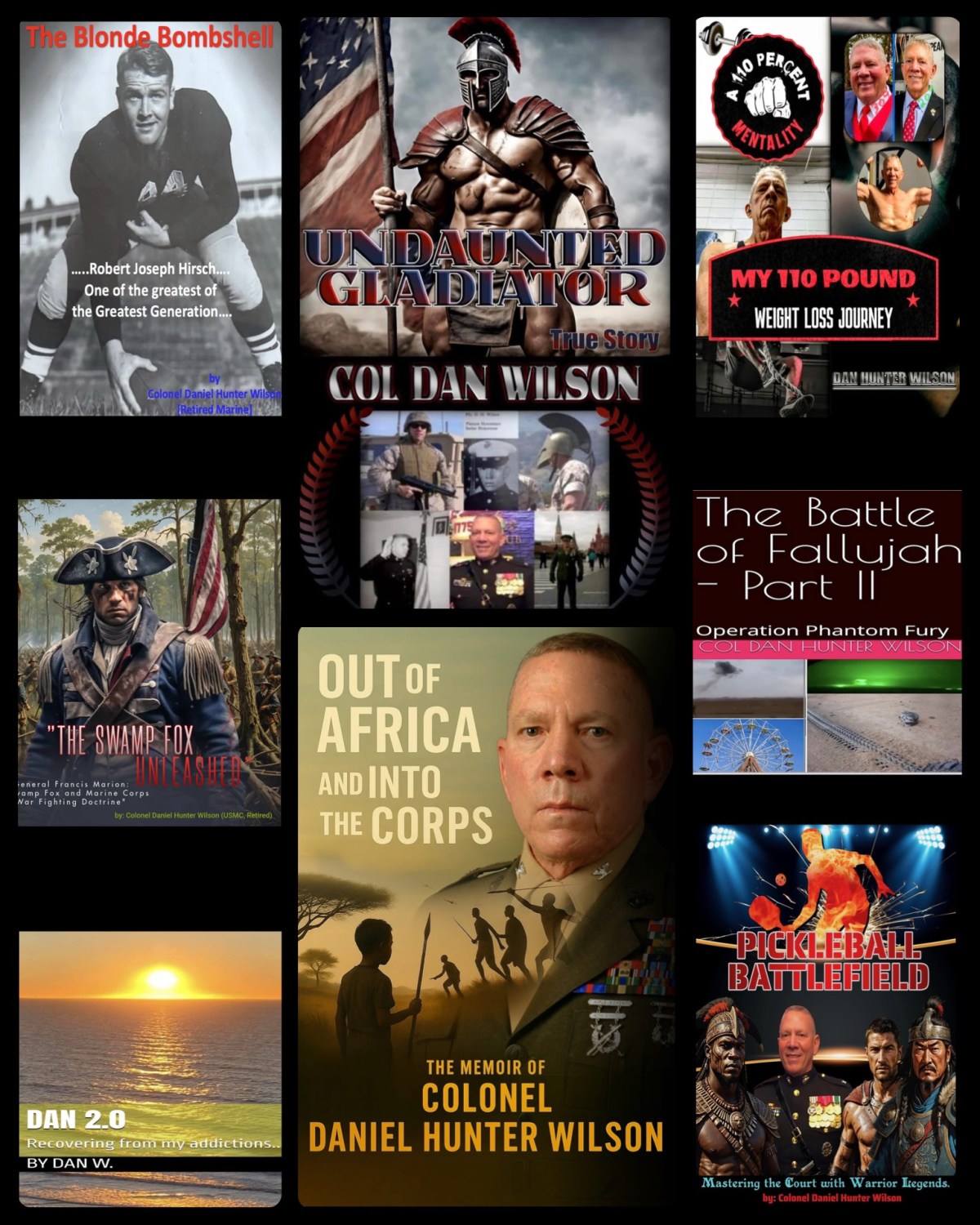
From Battlefield to Bookshelf: 8 Explosive Books by Retired Marine Colonel Dan Hunter Wilson – All Narrated by the Author Himself!

“Eight books. One unbreakable Marine.
From the jungles of Africa to the streets of Fallujah… from 309 pounds to a six-pack at 63… from false accusations to total victory… Colonel Dan Hunter Wilson has turned his entire life into lessons you can use today.
All eight titles — Hardcover, Paperback, Kindle, and Audiobook narrated by the Colonel himself — are live on Amazon right now.
And three brand-new books are coming in 2026.
Which one are you reading first?”

Retired U.S. Marine Colonel Dan Hunter Wilson poured 39 years of combat leadership, unbreakable discipline, raw faith, and hard-won lessons into eight powerhouse books now available on Amazon in Hardcover, Paperback, Kindle/eBook, and Audiobook formats — every single audiobook personally narrated by the Colonel in his signature Marine cadence.

And he’s not done. The Colonel is currently working on three new books he intends to publish in 2026.

Here are all eight titles, in the order he wants you to discover them. Each one is a mission you won’t want to miss.

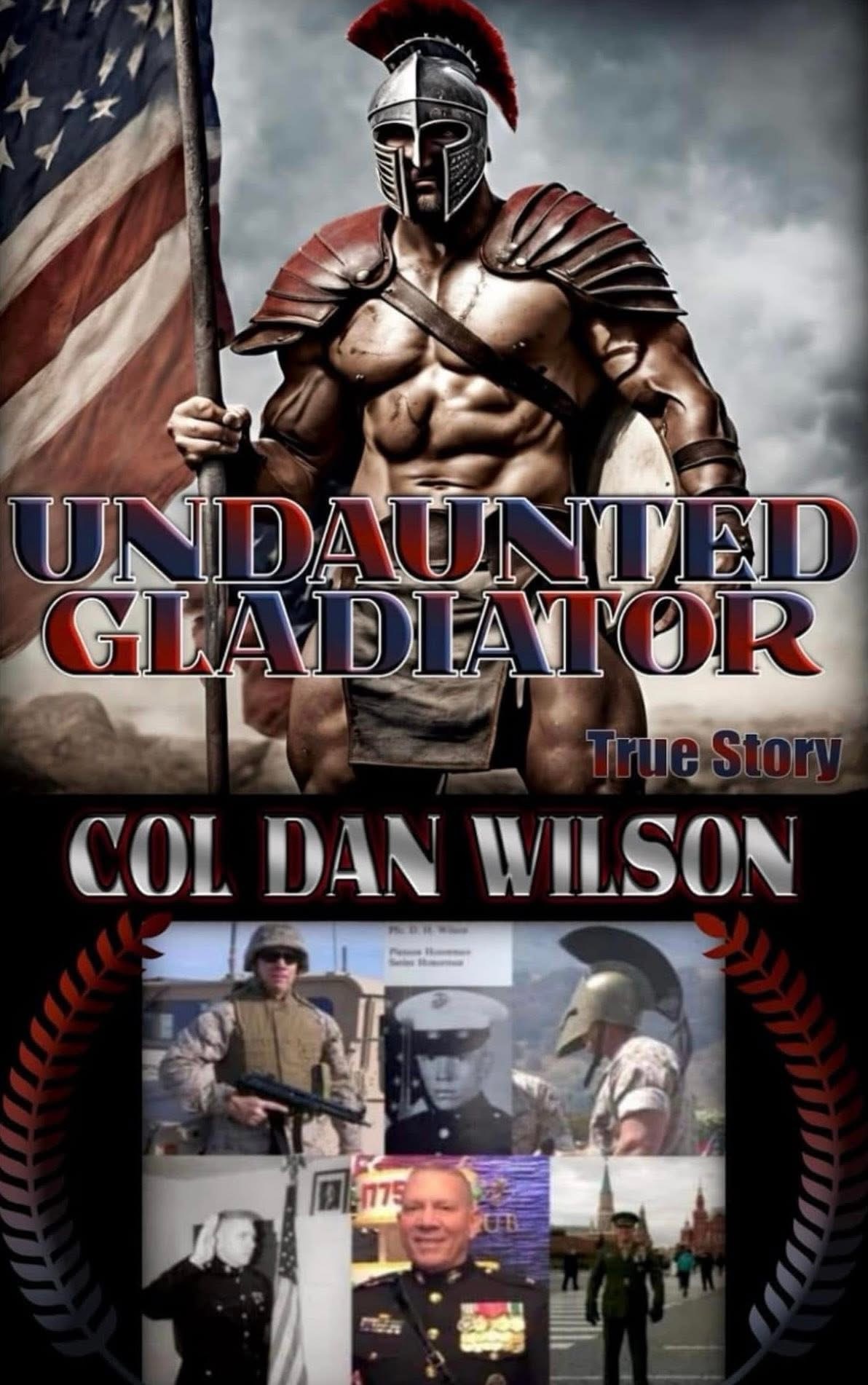
1. UNDAUNTED GLADIATOR

A decorated Marine Colonel with 39 years of service, 11 combat deployments, and 52 medals & ribbons is falsely accused of sexual assault just weeks before a Brigadier General promotion board. What follows is a modern-day gladiatorial fight against a broken military justice system. This is the raw, unfiltered story of one warrior who refused to stay down. If you believe in truth, honor, and second chances, this book will shake you — and inspire you.

Available in Hardcover, Paperback, Kindle, and Audiobook (narrated by the author):

2. OUT OF AFRICA AND INTO THE CORPS

Born to missionary parents in Africa, young Dan Wilson grew up among Zulu warriors, Bushmen, and Nile villages before trading the savanna for the Marine Corps recruiting poster. This prequel memoir takes you from barefoot childhood in remote African outposts to Boot Camp, mustang officer, and combat leader. A gripping, hilarious, and deeply moving origin story of a true American warrior.

Available in all formats:

3. DAN 2.0 – Recovering from My Addictions

After the fight of his life, Colonel Wilson hit rock bottom with addictions to alcohol, nicotine, and caffeine. In this brutally honest sequel to his own story, “Dan W.” (a nod to Bill W. of AA) shares the exact daily routine, prayers, and Marine discipline that delivered him into a sober, fit, and purposeful second act. A no-excuses blueprint for anyone ready for their own comeback.

Available in all formats:

4. A 110 PERCENT MENTALITY

At age 62, the retired Colonel stepped on the scale at 309 pounds. Using the same “110% mentality” his Drill Instructor screamed into him in 1981, he dropped 110 pounds, rebuilt a six-pack at 63, and reversed his health numbers — all without pills, surgery, or excuses. This is the complete battle plan: the Daniel Diet, ice baths, garage circuits, Pickleball, wind sprints, and the faith that powered every rep.

Available in all formats:

5. THE BLONDE BOMBSHELL

The intimate biography of Robert Joseph Hirsch — WWII fighter pilot, South Buffalo legend, and one of the greatest of the Greatest Generation. From high-school football star to smuggling a puppy into combat, delivering supplies under fire, and later transforming Myrtle Beach, Bob’s story is packed with humor, heroism, and the kind of larger-than-life character only the Greatest Generation produced.

Available in all formats:

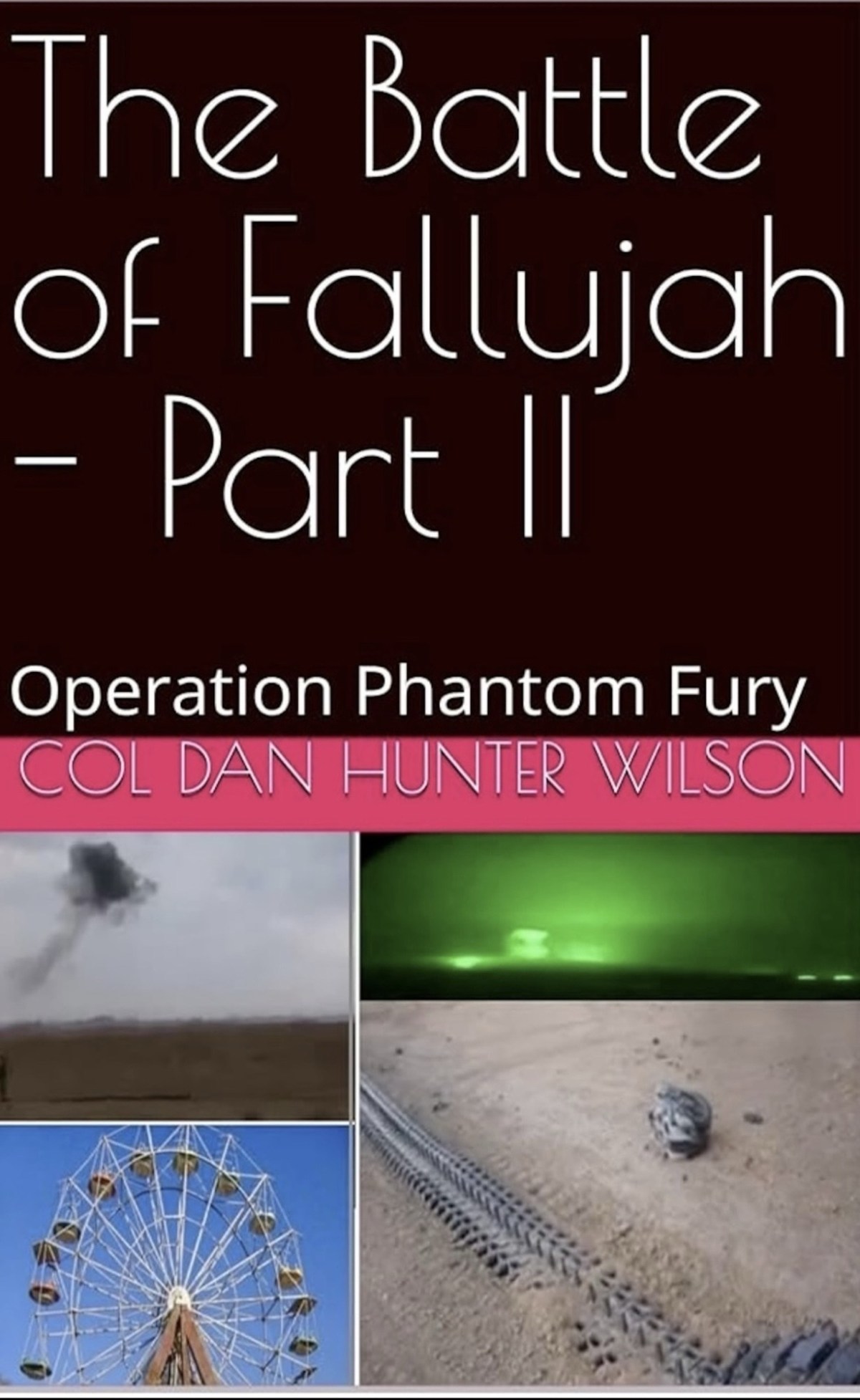
6. THE BATTLE OF FALLUJAH – PART II: Operation Phantom Fury

The definitive firsthand account of the most decisive urban battle of the Iraq War, written by the Marine who helped draft the final operations order, served as senior liaison to the Army’s Black Jack Brigade, and later ran current operations for I MEF. Night assaults, feints, the “three-building war,” and the wounded NCO who raised his trigger finger and said, “Send me back — it still works.” Updated on the 20th anniversary to honor the fallen.

Available in all formats:

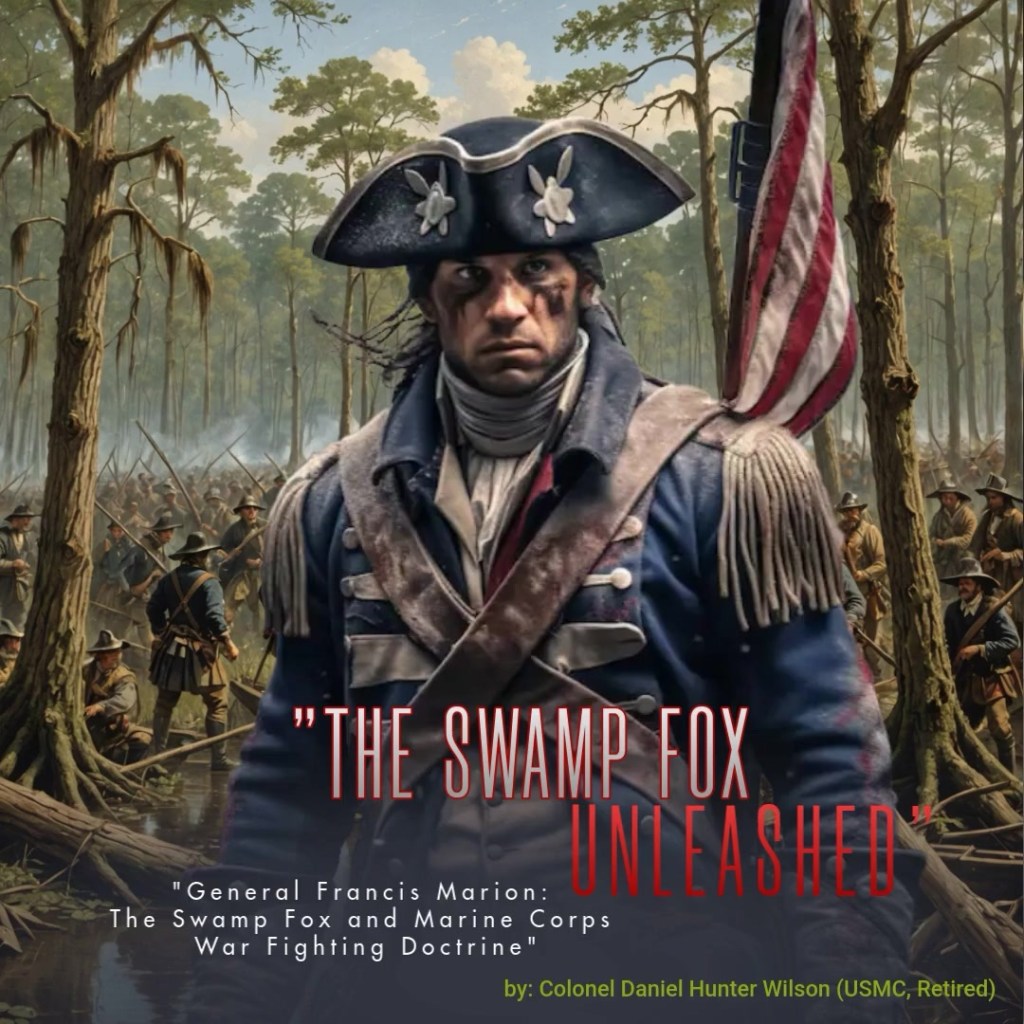
7. THE SWAMP FOX UNLEASHED

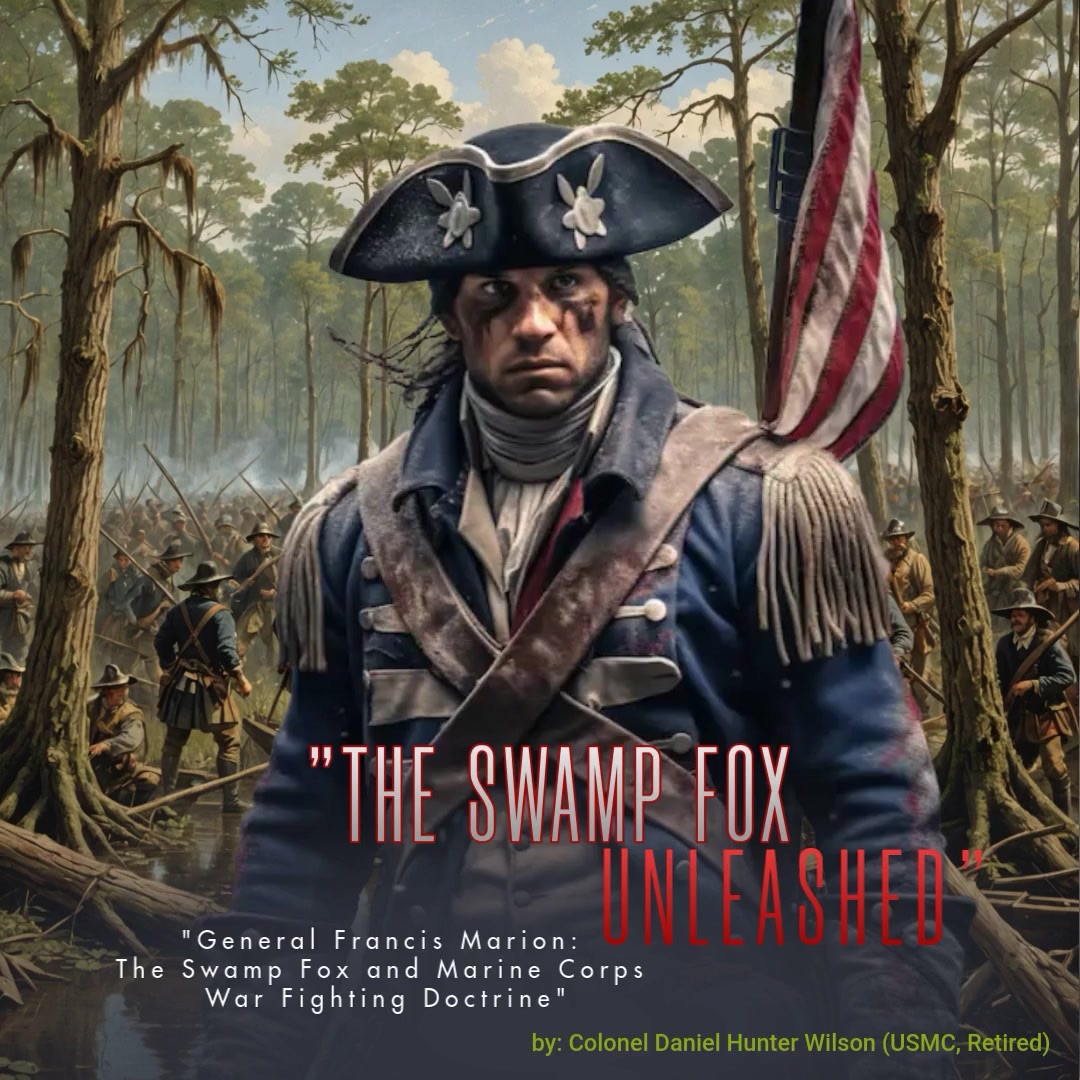
General Francis Marion’s Revolutionary War guerrilla tactics didn’t just harass the British — they became the DNA of modern Marine Corps warfighting doctrine (MCDP-1). Colonel Wilson, a lifelong student of maneuver warfare, connects the Swamp Fox’s swamp raids to Chesty Puller, Sun Tzu, and today’s Marine Corps. Short, explosive, and packed with timeless leadership lessons.

Available in all formats:

8. PICKLEBALL BATTLEFIELD

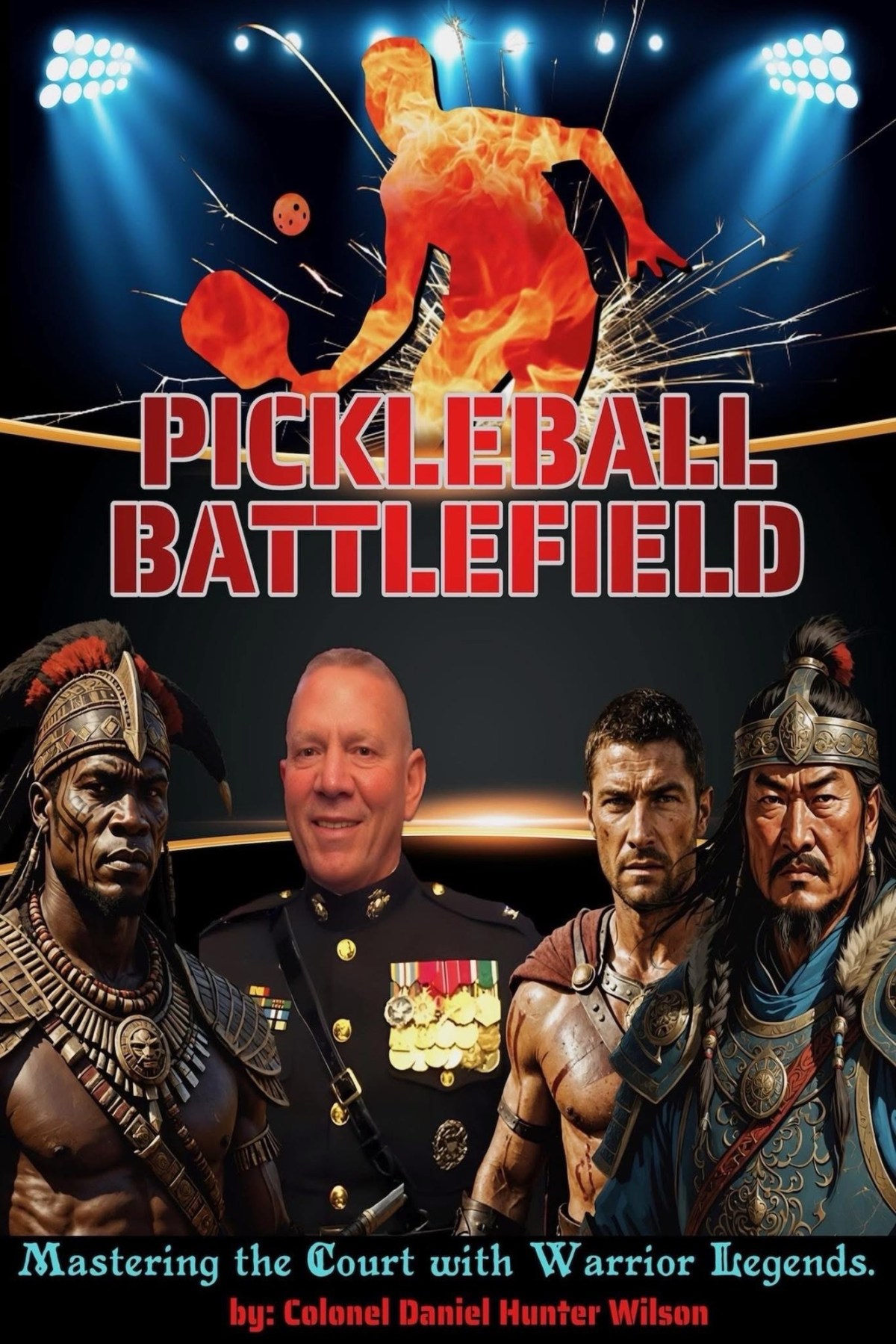
Turn your local court into a battlefield. Retired Colonel Dan Wilson fuses legendary warrior tactics — Shaka Zulu, Sun Tzu, Chesty Puller, the OODA Loop, and Marine Corps warfighting philosophy — with practical, hilarious, and deadly-effective pickleball strategies for doubles and singles. Whether you’re a beginner or a tournament player, this book will make you dangerous on the court and unstoppable in life.

Available in all formats:

Semper Fi and 110% — which mission are you taking on first?

The Battle of Fallujah – Part II: Operation Phantom Fury

“November 8, 2004. RCT-1 and RCT-7 rolled into the attack at 1900 under the cover of darkness.
The Army’s heavy armor punched through the insurgent lines like a sledgehammer.
Marines and Iraqi soldiers followed, clearing house by house in the most intense urban combat since Hue City.
By the Marine Corps’ 229th Birthday, both regiments had seized MSR Michigan and controlled the center of Fallujah.
The enemy who swore they would never leave alive…were either dead, captured, or fleeing west along the Euphrates.
This is the story of how we took the fight to the terrorists in their own sanctuary — and won.”

“Remember Fallujah!” – The Battle Cry That Was Stolen from the Enemy and Given Back to America

In November 2004, the city of Fallujah was the bright ember burning at the heart of the Iraqi insurgency.

Foreign fighters, Zarqawi’s Al-Qaeda terrorists, and local thugs had turned the “City of Mosques” into a fortified hellhole of IED factories, torture chambers, and execution sites.

They bragged they would make it America’s Stalingrad.

They were wrong.

Operation Phantom Fury (Al Fajr – “New Dawn”) became the single most decisive urban battle of the Iraq War.

In 10 days of savage house-to-house fighting, coalition forces crushed the insurgency’s stronghold, killed or captured thousands of fighters, and opened the door for Iraq’s first free elections.

And one Marine officer was in the middle of it all — planning it, briefing Congress and the media, then stepping into the fight with the Army’s Black Jack Brigade before taking over as I MEF Forward’s Current Operations Officer.

That officer was then-Major (soon-to-be LtCol) Dan Hunter Wilson.

Twenty years later, on the anniversary of the battle, Colonel Wilson (Ret.) has expanded his original 2005 Marine Corps Gazette article into a powerful, firsthand book:

The Battle of Fallujah – Part II: Operation Phantom Fury

This is not another dry history book.

This is the raw, unfiltered account from the man who:

Helped draft the final operations order signed by LtGen John Sattler

Served as senior Marine liaison to the Army’s Black Jack Brigade during the assault

Became the MEF’s Current Operations Officer and VIP briefer (briefing Senators McCain, Kerry, Biden, Clinton, and more)

Watched Marines, Soldiers, Sailors, Airmen, and Iraqi partners fight with the same indomitable spirit that has defined the Corps for 229 years

You’ll read the real story behind:

The brilliant shaping operations and feints that fooled the enemy

The night assault from the north that shattered insurgent defenses in hours

The “three-building war” — fighting, clearing caches, and delivering humanitarian aid on the same block

The wounded Marine NCO who raised his trigger finger and said, “Sir, send me back to my team. My trigger-finger is still good!”

How the battle directly led to 40% fewer attacks, the first free elections in Anbar, and the Sunni Awakening that broke the back of the insurgency

And the sobering post-script:

How the hard-won victory was later squandered by a precipitous U.S. withdrawal, allowing ISIS to rise — and why Fallujah had to be fought for all over again.

This book is Colonel Wilson’s gift to every Marine, Soldier, Sailor, Airman, and Iraqi who fought in Phantom Fury.

It is dedicated to those who sacrificed “some” and those who sacrificed all.

If you want to understand what really happened in Fallujah — told by a warrior who was there from planning to victory — this is the book.

Available now on Amazon:

Paperback

Kindle eBook

Audible Audiobook – narrated by the author

Semper Fi. Remember Fallujah.

— Colonel Dan Hunter Wilson, USMC (Ret.)

Myrtle Beach, South Carolina

A 110 Percent Mentality

“January 18, 2022. I stepped on the scale: 309 pounds.
Two years earlier I had retired from the Marine Corps after 39 years of staying under 220.
I had become what I used to discharge Marines for.
That morning I made a decision: I would attack my body the same way I attacked every mission in the Corps—with a 110% mentality.
110 pounds later I’m 199 pounds, have a six-pack at 63, and feel better than I did at 35.
If a hard-charging Marine can do it after retirement, you can too.
My book shows you exactly how.”

From 309 Pounds to a Six-Pack at Age 63: Retired Marine Colonel Drops 110 Pounds Using the Same 110% Mentality That Forged U.S. Marines

“Marines don’t give 100%. Marines give 110%!”

That scream from Drill Instructor Sergeant Antoinette still echoes in Colonel Dan Hunter Wilson’s head—nearly 45 years later. In January 2022, the 6’3” retired Colonel stepped on the scale and saw 309 pounds. The man who once ran a perfect 300 on the Marine Corps PFT, led Marines in Fallujah, and retired as the senior Colonel in the Corps had eaten himself into obesity in under two years.

He didn’t make excuses.

He didn’t buy pills.

He didn’t get surgery.

He simply decided to attack his body the same way he attacked every mission in 39 years of active duty—with his 110% mentality.

The result?

110 pounds gone.

Cholesterol from 235 to 171.

Blood pressure from 185/121 to 106/75.

Resting heart rate in the 40s.

A visible six-pack at 63.

And a book that is already changing lives.

A 110 Percent Mentality: My 110-Pound Weight Loss Journey is not another diet book.

It’s a battle plan written by a warrior who refused to stay soft.

Inside you’ll discover:

The exact “Daniel Diet” (yes, straight from the Bible) that Colonel Wilson used—vegetables + lean protein + portion control that tastes so good cheating never tempts you

The Basic Daily Routine that rebuilt his body, mind, and spirit (includes a 5-minute ice bath at 42–45°F every morning for unbreakable discipline)

The wake-up run + garage circuit + 2 hours of Pickleball + iron + wind sprints schedule that melted fat while building muscle

How he used faith, accountability, and ruthless consistency to power through every plateau

The same leadership principles he used to turn civilians into Marines—now applied to turning your body into a fighting machine

This is NOT theory.

This is a retired Colonel who packed his seabag for 39 years, led in combat, trained thousands of Marines, and then proved the same principles work in retirement when the stakes were his own life.

He lost the weight slow and steady (never more than 10 lbs a month) so his skin tightened naturally—no loose skin, no Ozempic face, just lean, hard, Marine-ready muscle.

And now he wants to help you do the same.

Ready to stop making excuses and start making progress?

Grab your copy of A 110 Percent Mentality right now and begin your own transformation today:

Buy on Amazon (Paperback)

Kindle/eBook version

One reader already lost 42 pounds in 90 days using the plan.

Your story could be next.

Semper Fi and 110%—let’s get after it.

— Colonel Dan Hunter Wilson

Myrtle Beach, South Carolina

A 110 Percent Mentality

Pickleball Battlefield

The day Shaka Zulu stormed the Pickleball net…
He didn’t just play — he charged.
One player became the “chest” — pinning opponents at the kitchen line with relentless volleys.
His partner became the “horns” — flanking with sharp sideline shots and lobs that stretched the defense thin.
Result? Total encirclement. Game over at 11-5.
That’s just one chapter from Pickleball Battlefield by retired Marine Colonel Daniel Hunter Wilson.
From Sun Tzu’s deception dinks to Chesty Puller’s never-quit comebacks… from the OODA Loop to full MCDP 1 Warfighting applied to doubles… this book turns history’s greatest warriors into your new Pickleball coaches.
And Rule #1? HAVE FUN.
Available now on Amazon → https://www.amazon.com/Pickleball-Battlefield-Mastering-Warrior-Legends/dp/B0F2N8TLDH
Pickleball will never be the same.

What if the greatest warriors in history stepped onto a Pickleball court with paddles instead of swords? A retired Marine Colonel just made it happen — and the results are pure genius.

Pickleball Battlefield: Mastering the Court with Warrior Legends by Colonel Daniel Hunter Wilson (Retired Marine) is not your average sports book.

This is the wildest, most entertaining, and surprisingly effective Pickleball playbook ever written.

Imagine Shaka Zulu storming the net with his “horns of the buffalo” formation. Sun Tzu using deception to fake a smash… then dropping a perfect dink. Genghis Khan riding imaginary horses across the court in lightning raids. Chesty Puller refusing to lose at 0-8 and turning the game into a Marine assault. Sitting Bull patiently waiting for the perfect ambush. Napoleon, Patton, Hannibal, Lawrence of Arabia, Stormin’ Norman, and even Lieutenant Dan (yes, the author himself) bringing their legendary tactics to the kitchen line.

And that’s just the start.

Colonel Wilson — combat veteran, former battalion commander in Fallujah, and one of the most decorated Marines of his generation — also breaks down MCDP 1 Warfighting, the OODA Loop, and the timeless duel between attrition vs. maneuver warfare… all applied directly to doubles and singles.

But here’s the best part: Rule #1 is HAVE FUN! This book is laugh-out-loud funny, packed with practical tips, and written by a man who has led Marines in combat and now leads Pickleball partners in Myrtle Beach with the same fire.

Whether you’re a weekend warrior, a tournament grinder, a Marine, a history buff, or just someone who loves a good story with a paddle in hand — Pickleball Battlefield will make you a better player… and have you grinning the entire time.

Available right now on Amazonhttps://www.amazon.com/Pickleball-Battlefield-Mastering-Warrior-Legends/dp/B0F2N8TLDH

Grab your copy, hit the court, and start playing like the legends.

Semper Fi… and keep the ball in play!

Pickleball Battlefield

The Swamp Fox Unleashed

The night the Swamp Fox taught the British a lesson they never forgot…
Francis Marion’s men had almost no ammunition.
So he did what any good Marine would do: he improvised.
At Fort Watson, he ordered his riflemen to build a tower taller than the British stockade walls — using nothing but axes, logs, and sheer willpower.
At dawn the marksmen climbed up and opened fire straight down into the fort. The British couldn’t return fire without exposing themselves.
Within hours the white flag went up.
That was 1781.
Two centuries later, the U.S. Marine Corps wrote the same principle into MCDP 1 Warfighting: attack the enemy’s critical vulnerability with everything you have, even if you have to build the weapon on the spot.
Colonel Dan Wilson — combat Marine, former battalion commander, and author of this book — calls Francis Marion “the first American maneuverist.”
He wasn’t wrong.
The Swamp Fox didn’t just win battles.
He wrote the doctrine… before the doctrine existed.
Available now on Amazon → https://www.amazon.com/Swamp-Fox-Unleashed-General-Marion/dp/B0D3K9L2M4
Semper Fi.

The Swamp Fox Unleashed – The Revolutionary War guerrilla who secretly invented modern Marine Corps warfare… 200 years before the Corps wrote the book.

What if the most brilliant warfighting mind in American history never wore a Marine uniform… but fought exactly like one?

That’s the jaw-dropping revelation in Colonel Daniel Hunter Wilson’s explosive new book, The Swamp Fox Unleashed: General Francis Marion and Marine Corps Warfighting Doctrine.

In 2000–2001, then-Major Wilson submitted a research paper at Marine Corps Command and Staff College that stunned his professors. He proved — with primary sources and cold, hard analysis — that Brigadier General Francis Marion (the legendary “Swamp Fox”) was practicing maneuver warfare in the swamps of South Carolina in 1780… decades before the U.S. military even had a name for it.

This is not just another Revolutionary War biography.

This is the first book ever to take Francis Marion’s rag-tag militia tactics and hold them up against MCDP 1 Warfighting — the Marine Corps’ sacred capstone doctrine — and show they are identical.

You will discover:

  • How Marion used recon-pull, speed, surprise, and deception to run circles around the British — the exact same concepts taught at Quantico today.
  • How he integrated the six warfighting functions (Command & Control, Maneuver, Fires, Intelligence, Logistics, Force Protection) with zero staff, zero budget, and almost no ammunition.
  • How he turned a handful of farmers and hunters into a force that exhausted Lord Cornwallis and helped win the South.
  • How his leadership style — lead from the front, share every hardship, reward valor publicly, protect your men like sons — is the blueprint every Marine leader still studies.

And the best part? The author isn’t some armchair historian. Colonel Dan Wilson is a retired Marine infantry officer who commanded in combat from Desert Storm to Fallujah, earned the Bronze Star, and rose to become the senior Colonel in the entire Marine Corps. When he says Marion “would fit right in with today’s Marine Corps,” he speaks from four decades of leading Marines in the same doctrine.

This book is short, sharp, and impossible to put down. It reads like a thriller but teaches like a textbook. Whether you’re a history buff, a serving or former Marine, a leadership junkie, or just love stories of underdogs who outsmart empires, The Swamp Fox Unleashed will change how you think about warfare, leadership, and American grit.

Available right now on Amazonhttps://www.amazon.com/Swamp-Fox-Unleashed-General-Marion/dp/B0D3K9L2M4

The Swamp Fox didn’t just fight the British. He fought the way Marines still fight today.

And Colonel Wilson just proved it.

Semper Fi — and read this book.

The Swamp Fox Unleashed

UNDAUNTED GLADIATOR (25 Five-Star ratings)

In a travesty of military justice, Colonel Wilson went from HERO to ZERO based on one false allegation of sexual assault from a drunken and deranged military dependent wife. A cowardly jury of general officers, fearing that they would never see another star on their collars, convicted Colonel Wilson on one count of sexual assault, but only sentenced him to 1/5 of what the sentence called for. Colonel Wilson spent nearly 3 years in three different military prisons, before being unanimously exonerated “with prejudice” by the judges of the Navy-Marine Corps Court of Criminal of Appeals. Vengeful military lawyers and brass got their “pound of flesh” in the end by pleading with the Secretary of the Navy’s office to retire Colonel Wilson with the pay of a Lieutenant Colonel and with an “Other Than Honorable” characterization of his extraordinary 39 years of service. This, after being promised “no punishment” by his duplicitous Convening Authority. Rising from the ashes, like the proverbial Phoenix, Colonel Wilson went from Victim to Victor, and is now a prolific author and motivational speaker.

“Colonel Wilson’s story is a classic example of gross military injustice. The Marine Corps should be deeply ashamed for railroading an innocent man into prison! We have been observing examples of military injustice for over 50 years, but nothing, and we mean nothing quite compares to the abomination of justice that Colonel Daniel H. Wilson suffered at the hands of the United States Marine Corps…A great man who was stabbed in the back by his own people. What happened to Colonel Wilson should never happen to anyone!” 

MILITARYCORRUPTION.COM

UNDAUNTED GLADIATOR

Order YOUR copy here:

https://a.co/d/0fIvPj0N