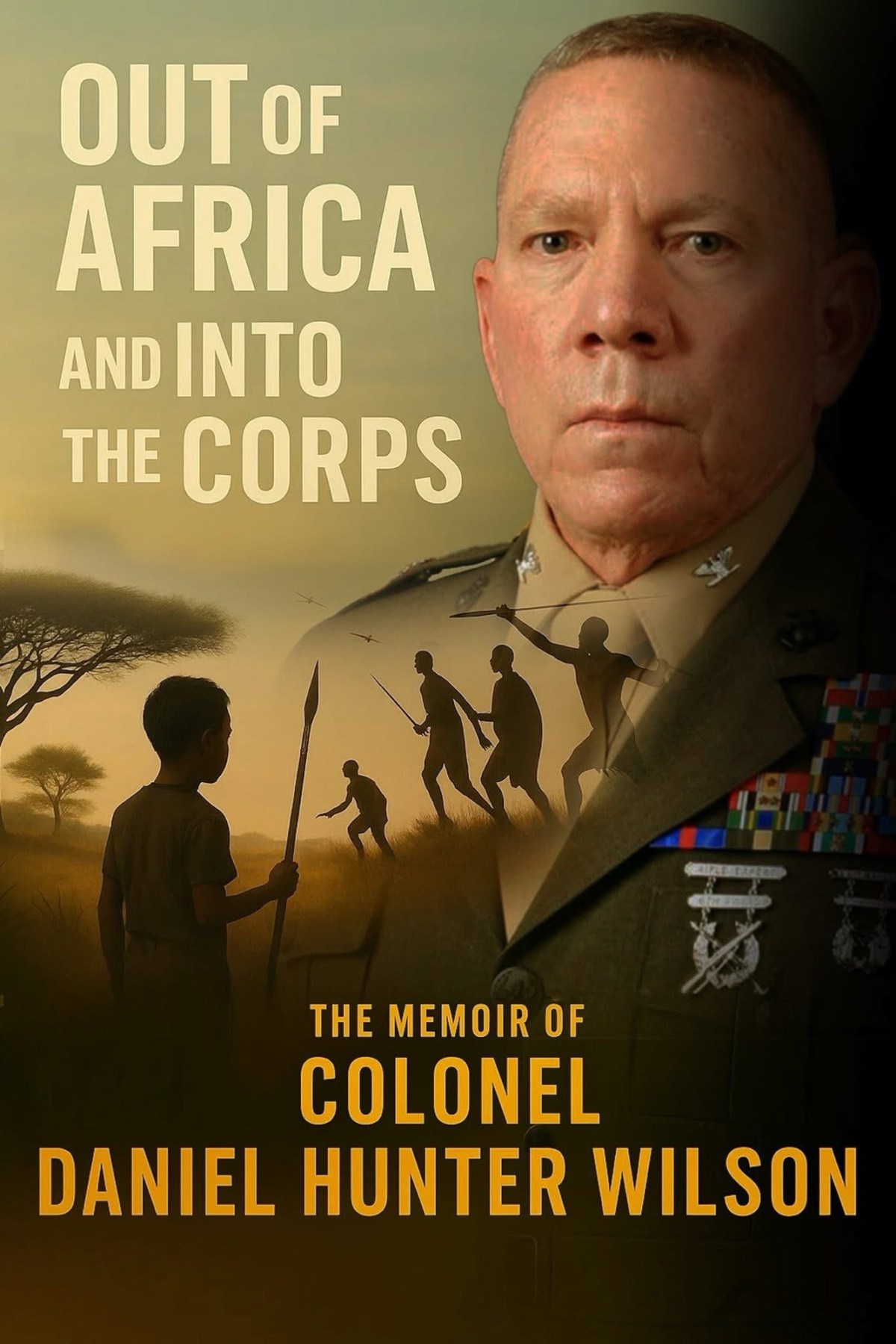
The Eve of the Real Desert Storm…23 February 1991…Thirty-five years ago tonight!

The day before the ground invasion, our Operations Officer (callsign Dealer) asked me to mark the route to the first obstacle belt in Kuwait with chem lights that were only visible to our forces. Mission accomplished and we got our final briefing from the intel weanies who knew nothing. I gave my Marines the real gouge on the warrior prowess of Arab forces…they have none, simply put!

The real start of Desert Storm was the ground invasion of Kuwait by us grunts on 24 February 1991. Here’s what my Heavy Machine Gun Platoon (1st Battalion, 5th Marines, Task Force Ripper, 1st Marine Division) did that day…from my book, OUT OF AFRICA AND INTO THE CORPS:

On February 23rd, 1991, Dealer called out to me and asked that I mark a route for our battalion to the first obstacle belt. I grabbed Sergeant Jenkins’ section. One of his superb Squad Leaders was Corporal Tod Shores. We found a suitable route to the point in the obstacle belt that was 1/5’s designated penetration point. On the way back to our battalion’s position, we emplaced infrared chem-lights, making them only visible to our eyes, traveling from south to north and not to any enemy eyes looking to the south from the north. We accomplished the mission and made it back to our platoon area about 1700. In just seven hours, our battalion was to begin movement to our attack positions at 0001 on 24 February 1991.

In the final briefing by our intelligence analysts, they predicted that we would face fierce opposition from the Iraqi troops in Kuwait and predicted thirty percent casualties in the fight through the obstacle belts.

When they departed, I told my Marines of Heavy Machine Gun Platoon that I felt the intel guys were full of shit. “My dad used to joke about the shortest book in the world being of Arab war heroes,” I said. “I grew up for a good chunk of my life around Arabs. My experience is that when faced with danger, they are cowards unless they are hyped up on drugs, like methamphetamines. My personal assessment is that when faced with United States Marines, they will quickly surrender and throw up white flags. How we perform in battle will reverberate through eternity. We will prevail and be heading home soon to tell our war stories back home. Our road home is through Kuwait. The faster we get this done, the faster we go home to our families and the land of ‘milk and honey.’ Our reputation precedes us into battle, warriors. Let us not disappoint our legendary Marine heroes on whose shoulders we stand today. When God is for us, no one can stand against us, and I am certain that God is with us. We will fight, fight, fight, crush our enemies, and see them driven before us.’” I then directed our Marines to “suit up at MOPP Level 2.” From our training in Nuclear, Biological, and Chemical (NBC) warfare, we know that MOPP stands for Mission Oriented Protective Posture and the various levels are to protect military members. MOPP Level 2 is actually putting on and wearing the chemical suit that is worn over our uniforms along with the overboots. We were each issued a single suit that we put on, carrying our gas masks and gloves on our person. This combo was worn for the next four days. It was hot and sweaty…very uncomfortable but had to be worn.
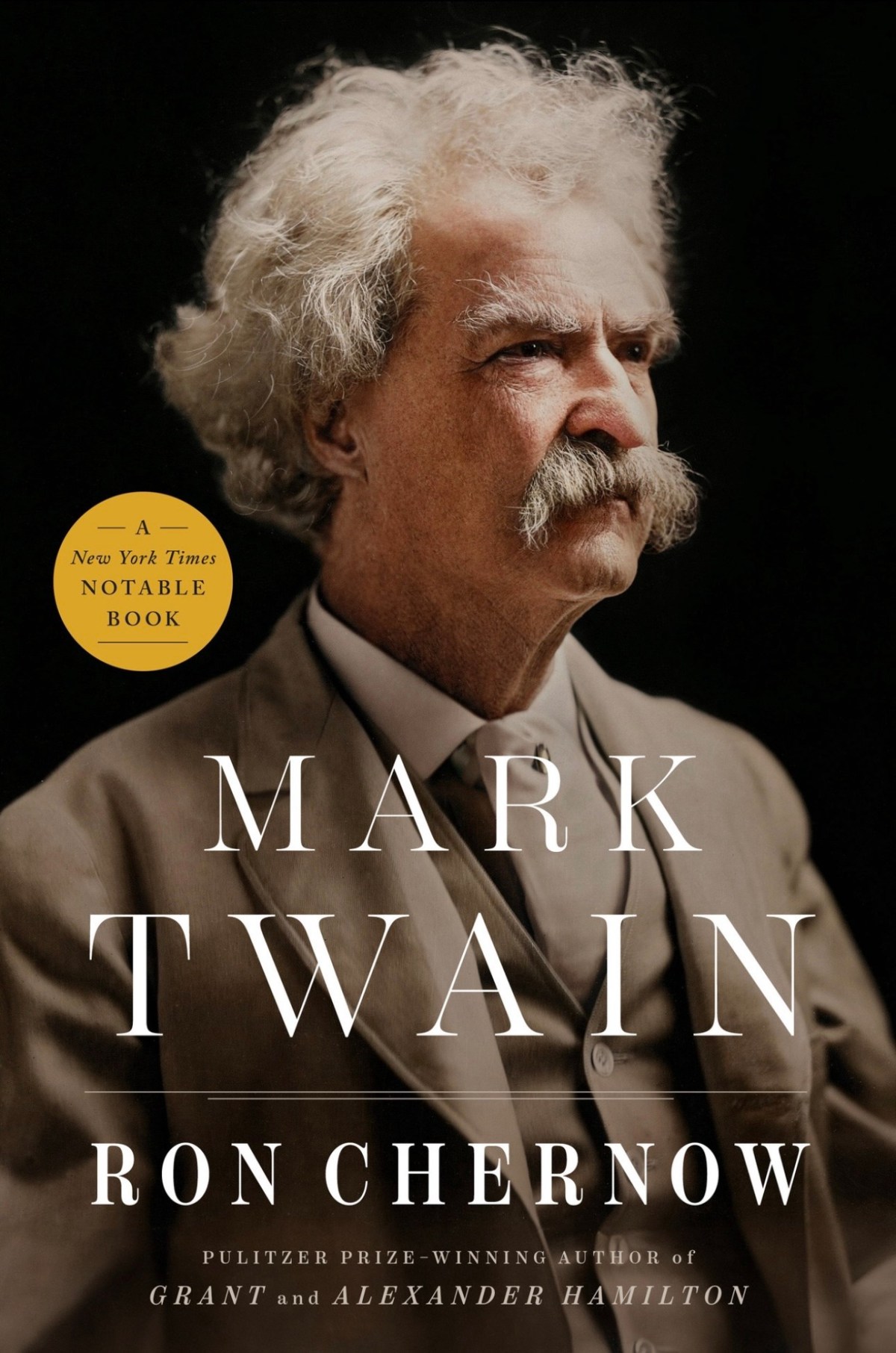
MARK TWAIN by Ron Chernow

Ron Chernow’s “Mark Twain” masterfully captures the wit, complexity, and enduring legacy of America’s greatest humorist, blending meticulous research with engaging narrative to bring Samuel Clemens vividly to life.

I have enjoyed reading almost all of Ron’s books, but particularly this one! In the pantheon of American literary biographies, Ron Chernow’s “Mark Twain” stands as a towering achievement—a richly detailed, profoundly insightful portrait of Samuel Langhorne Clemens, the man behind the iconic pen name. Published in 2025, this Pulitzer Prize-winning author’s latest work dives deep into the life of the writer hailed by William Faulkner as the “father of American literature.” Chernow, known for his masterful biographies of figures like Alexander Hamilton and Ulysses S. Grant, brings the same rigorous scholarship and narrative flair to Twain, resulting in a book that is as entertaining as it is enlightening.

From Twain’s humble beginnings in Hannibal, Missouri, where his boyhood adventures inspired classics like “The Adventures of Tom Sawyer” and “Adventures of Huckleberry Finn,” Chernow traces a journey marked by ambition, innovation, and no small amount of chaos. We see young Sam as a steamboat pilot on the Mississippi, a role that not only shaped his pseudonym (“Mark Twain” meaning “two fathoms deep”) but also infused his writing with the rhythms of the river and the raw pulse of frontier life. Chernow deftly explores how the Civil War disrupted this path, propelling Twain westward to Nevada, where he honed his satirical voice as a journalist, lampooning everything from politics to human folly.

What sets this biography apart is Chernow’s unflinching examination of Twain’s complexities. Far from a one-dimensional humorist, Twain emerges as a man grappling with fame’s double-edged sword: shamelessly courting celebrity while crafting a persona that masked personal vulnerabilities. Chernow delves into Twain’s financial misadventures, from disastrous investments in inventions like the Paige Compositor to his near-bankruptcy, revealing a restless entrepreneur whose optimism often bordered on recklessness. Yet, these setbacks fueled some of his sharpest works, including the biting social commentary in “The Gilded Age.”

Personal tragedies add poignant depth to Chernow’s narrative. The loss of Twain’s beloved wife, Livy, and several children is handled with sensitivity, showing how grief darkened his later years and influenced his more philosophical writings. Chernow also confronts Twain’s evolving views on race and imperialism, positioning him as a progressive voice who boldly critiqued slavery and American expansionism, even as he navigated the prejudices of his era. Drawing on thousands of letters, unpublished manuscripts, and archival treasures, Chernow paints a Twain who was both a product of 19th-century America and a prescient critic of its flaws.

At over 1,000 pages, “Mark Twain” is no light read, but Chernow’s prose flows like the Mississippi itself—propelled by Twain’s own exuberant spirit. Quotes from Twain’s letters and lectures pepper the text, bringing his irreverent humor to the fore: “The secret of getting ahead is getting started,” or his famous quip on quitting smoking (“easy—I’ve done it thousands of times”). This biography not only chronicles a life but revives it, making Twain feel as vital and relevant today as he was in his heyday.

For fans of history, literature, or simply great storytelling, Ron Chernow’s “Mark Twain” is essential reading. It reminds us why Twain’s legacy endures: his ability to hold a mirror to society with wit and wisdom. In an age of superficial fame, this book celebrates a true original who turned personal reinvention into an art form. Highly recommended—dive in and let the current carry you away! I’m sure you’ll enjoy it as much as I did!